If you have ever finished a medium coffee in Lincolnton, felt perfectly fine, then had a small espresso drink later that left you wide awake at midnight, you have already learned the main lesson about caffeine: cup size alone tells you very little. What matters is how the drink was made, how much coffee went into it, and how big the serving actually is.
At Fausto Coffee, this is a first-timer's walkthrough for reading caffeine with honest rough numbers. Every figure here is a range, because beans, roast, grind, and recipe all shift the result. Anyone who gives you an exact number for a cafe drink is guessing with confidence.
Start with the building blocks
Caffeine comes from the coffee itself, not from the brewing machine. A standard shot of espresso, about one ounce, typically carries around 60 to 75 milligrams. A cup of drip coffee carries more total caffeine than a single shot, commonly around 95 milligrams for eight ounces and more for larger servings, because there is simply more coffee liquid in the cup, even though it is less concentrated per ounce.
That concentration trap catches a lot of people. Espresso tastes intense, so it feels like the strongest choice by far. Per ounce it is. Per drink, a large drip coffee or a large cold brew often delivers more caffeine overall. Milk drinks complicate the picture only a little: the milk adds volume, not caffeine, so a latte's caffeine is set by its shots, usually one or two.
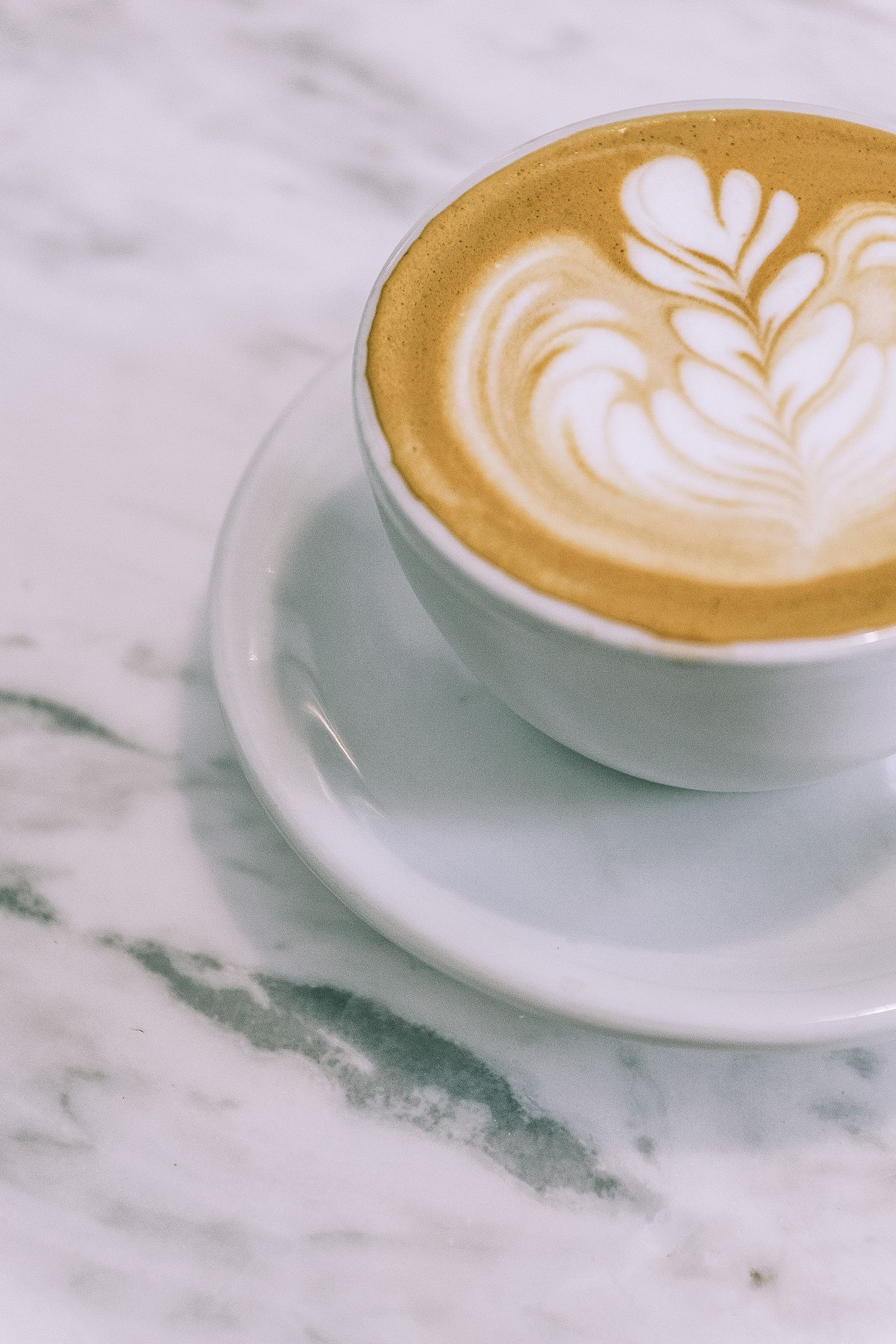
Walking through a typical order, step by step
Imagine you are ordering in the morning and trying to predict how you will feel by mid-afternoon. The steps below mirror how a barista thinks about a drink, from the base outward.
- Pick the base: drip coffee, cold brew, or espresso. Drip and cold brew servings are larger, so their totals climb with size. Espresso starts small and concentrated.
- Count the shots in espresso drinks. One shot is roughly 60 to 75 milligrams. A drink built on two shots lands roughly double that, before anything else is added.
- Check the serving size in ounces. Doubling a drip coffee from eight ounces to sixteen roughly doubles its caffeine, even at the same strength.
- Note what is added. Milk, foam, water, and ice change flavor, temperature, and dilution, but they do not add caffeine. An Americano is shots plus water, so its total stays at the shot count.
- Factor in the time of day. Caffeine typically peaks within an hour and clears slowly over several hours, so a mid-afternoon coffee affects sleep for many people more than a morning one does.
- Add up the whole day, not just one cup. A morning drip, a lunchtime iced coffee, and an afternoon latte can stack quietly. General health guidance commonly cites about 400 milligrams per day as an upper level many healthy adults stay under.
Drink-by-drink ranges worth remembering
A small drip coffee usually falls in the range of a modest morning cup, while a large drip can approach two to three times that. Cold brew varies the most, because shops dilute concentrate differently, but a standard serving often lands at the higher end of the coffee range. A cappuccino or latte made with one shot sits near the low end; the same drink with two shots sits in the middle. Decaf is not zero: a cup of decaf typically carries a small amount, often just a few milligrams up to around 15, depending on the process and serving.
Tea and other drinks belong in the same mental ledger. Black tea generally carries less caffeine than coffee per cup, and herbal teas carry none, but if you are counting a day, everything with caffeine counts. Energy drinks list their content on the label, which at least removes the guesswork.
Reading your own response
Two people can drink the same coffee and feel it differently. Body size, tolerance built up over time, food in your stomach, and plain individual variation all matter. Daily drinkers develop tolerance, so the same cup feels weaker after a few weeks of routine. Cutting back suddenly can bring a headache for a day or two, which is withdrawal, not a sign you need the coffee to function.
The practical approach is simple: learn the ranges, notice your own pattern for a week, and adjust size or timing before you adjust everything else. Most people find that moving the last coffee earlier in the day does more for sleep than switching drinks does.
Common questions
Does a darker roast have more caffeine?
Not meaningfully. Roast level changes flavor far more than caffeine. Differences by bean and serving size are much larger than any difference from roast.
Is espresso the highest-caffeine order?
Per ounce, yes, but a large drip coffee or cold brew usually contains more caffeine in total. The whole drink is what counts, not the concentration.
How much caffeine is in decaf?
A small amount remains after decaffeination, typically a few milligrams per cup and sometimes up to around 15. It is a low-caffeine choice, not a zero-caffeine one.
Photos in this guide are representative stock images.
← All guides from Fausto Coffee← Back to Fausto Coffee